.png)
Wood Filler for Termite Damage: What Works, What Doesn’t, and What to Do First
Updated: May 20
When homeowners discover termite damage, one of the first questions they ask is whether wood filler can fix the problem. Understanding How to Repair Termite Damage properly starts with knowing the limits of cosmetic solutions. While wood filler and wood hardener can play a role in certain repairs, they are not universal solutions. Used incorrectly, they can hide serious structural issues and allow termites to continue causing damage unnoticed. This guide explains when wood filler for termite damage is appropriate, when it is not, and how professional termite control fits into a safe, long-term repair strategy—especially when evaluating termite damage vs water damage.
Understanding How Termites Damage Wood

Termites consume wood from the inside out, targeting cellulose while leaving a thin surface layer intact. This makes damage difficult to detect and often far more severe internally than it appears externally. Unlike surface rot or normal wear commonly seen in termite damage vs water damage comparisons, termite-damaged wood may look solid but crumble easily under pressure or sound hollow when tapped.
Because of this hidden destruction, cosmetic repairs alone are rarely sufficient. Before considering wood filler or hardener, it’s critical to understand whether the damaged wood still has enough structural integrity to support repair. Even cases that appear to be Minor termite damage may involve deeper internal weakening. In many situations, professional inspection is the only reliable way to determine whether reinforcement or full replacement is necessary.
When Wood Filler Can Be Used for Termite Damage
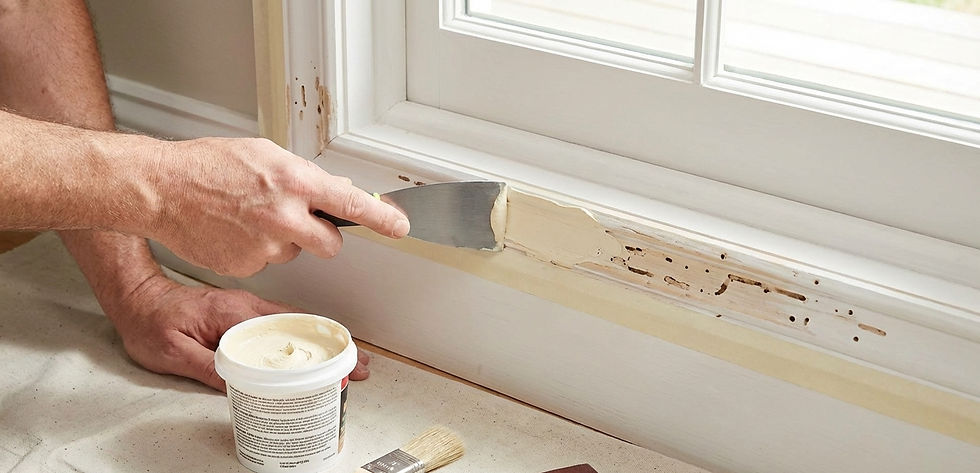
Wood filler for termite damage can be appropriate in limited situations where the damage is minor and strictly cosmetic. These scenarios typically involve non-load-bearing wood such as trim, baseboards, window frames, or decorative elements, often classified as Minor termite damage after inspection.
Wood filler may be suitable when:
Termite activity has been fully eliminated
The damage does not affect structural integrity
The wood is still firm and stable beneath the surface
The repair is cosmetic rather than structural
In these cases, wood filler can restore the appearance of damaged wood and prepare it for painting or finishing. However, filler should never be used as a substitute for replacing compromised framing or support structures, regardless of how small the damage appears.
The Role of Wood Hardener in Termite Damage Repair

Wood hardener for termite damage is often used alongside filler to stabilize weakened wood fibers. Wood hardener penetrates porous or partially damaged wood, strengthening it before filler is applied. This process can help extend the life of mildly compromised, non-structural wood when addressing Minor termite damage.
However, wood hardener does not restore lost structural strength. It is designed to reinforce surface integrity—not rebuild load-bearing capacity. Using wood hardener on severely damaged framing can create a false sense of security while leaving the structure unsafe, particularly when homeowners misjudge termite damage vs water damage.
Proper use of wood hardener requires:
Confirmation that termites are no longer active
Assessment that the wood is not load-bearing
Controlled application to prevent sealing in moisture or pests
Professional guidance ensures these products are used appropriately and safely.
Why Cosmetic Repairs Alone Can Be Risky

One of the biggest mistakes homeowners make is using wood filler or hardener without addressing the underlying termite problem. Filling damaged wood before treatment can trap termites inside or create ideal conditions for reinfestation. Even worse, cosmetic repairs may hide expanding damage until major structural failure occurs.
Proper How to Repair Termite Damage follows a specific order:
Professional termite inspection
Complete termite treatment
Structural assessment of damaged wood
Appropriate repair or replacement
Cosmetic restoration, if applicable
Skipping steps increases long-term repair costs and risks safety. Attack Pest Management ensures termite activity is fully eliminated before any repair recommendations are made.
When Wood Replacement Is the Only Safe Option

In many cases, especially where framing, beams, or floor supports are affected, wood filler and hardener are not appropriate. Termites weaken wood internally, and once structural integrity is compromised, replacement is the only safe solution—regardless of whether the damage initially appears minor.
Signs that wood should be replaced—not filled—include:
Crumbling or hollow framing
Sagging floors or ceilings
Doors or windows going out of alignment
Damage to load-bearing components
Professional termite damage repair prioritizes safety, ensuring all repairs meet structural standards and building codes.
Professional Termite Control Before Any Repair
No repair method—filler, hardener, or replacement—will last if termites are still present. Attack Pest Management provides comprehensive termite inspections and treatment plans designed to eliminate active infestations and prevent future damage.
Their approach ensures repairs are made only after the structure is protected, reducing the risk of reinfestation and costly repeat repairs. Combining professional termite control with appropriate repair methods delivers long-term protection and peace of mind.
Get Expert Help from Attack Pest Management:
Visit Attack Pest Control or call us at 626-915-1111 to schedule an inspection before attempting any repairs.
Frequently Asked Questions About Wood Filler and Termite Damage
1. Can wood filler fix termite damage permanently?
No. Wood filler for termite damage is only suitable for minor cosmetic repairs after termites are eliminated. It cannot restore structural strength.
2. Is wood hardener better than wood filler for termite damage?
They serve different purposes. Wood hardener for termite damage stabilizes weakened wood, while filler restores surface appearance. Neither replaces structural wood.
3. Can I use wood filler before termite treatment?
No. Repairs should only be done after professional termite treatment to prevent reinfestation.
4. How do I know if damage is cosmetic or structural?
A professional termite inspection is the safest way to determine whether wood can be repaired or must be replaced.
5. Will wood filler stop termites from coming back?
No. Wood filler does not prevent or kill termites. Professional termite control is required.
6. Is it dangerous to leave termite-damaged wood unrepaired?
Yes. Even minor damage can worsen over time if left untreated, potentially affecting structural safety.
7. Can I use wood filler on framing or beams?
No. Load-bearing components must be repaired or replaced professionally.
8. How long should I wait to repair after termite treatment?
Your pest control professional will advise, but repairs typically begin once termite activity is fully eliminated.


Comments