.png)
Termite Damage vs Water Damage: How to Tell the Difference Before It’s Too Late
Updated: May 20
Homeowners often struggle to identify whether damage to their walls, floors, or wooden structures is caused by moisture or termites. Understanding How to Repair Termite Damage begins with correctly identifying the source. Both issues can weaken a home, but they require very different solutions. Misidentifying the problem can lead to improper repairs, ongoing damage, and costly long-term consequences. This guide explains the key differences between termite damage and water damage, how to recognize warning signs, and when professional inspection is critical.
Why Termite Damage and Water Damage Are Commonly Confused

At first glance, structural damage caused by termites can resemble moisture-related deterioration. Both may result in warped wood, cracking surfaces, or weakened framing. However, the underlying causes and progression of damage are entirely different. Understanding termite damage vs water damage starts with knowing how each problem develops.
Water damage typically spreads outward from a visible source such as a leak, flood, or condensation buildup. In contrast, termites consume wood from the inside out, leaving a thin outer layer intact. This makes termite infestations particularly dangerous, as damage may remain hidden until structural integrity is already compromised—even when the issue appears to be minor termite damage.
Failing to correctly identify the cause often results in cosmetic repairs that mask the problem rather than resolve it. That’s why early professional evaluation is essential before attempting How to Repair Termite Damage on your own.
What Termite Damage Looks Like in Wood and Structures

Many homeowners ask, what does termite damage look like when compared to normal wear or moisture damage? Termite wood damage often appears subtle on the surface but severe internally. Wood may look intact while sounding hollow when tapped or crumbling easily when pressed.
Common visual indicators of termite wood damage include:
Hollowed or tunneled wood structures
Bubbling or blistering paint with no visible moisture
Mud tubes along walls or foundations
Wood that breaks apart easily when touched
Because termites eat cellulose, they target wooden framing, floor joists, subfloors, door frames, and window sills. Damage often follows the grain of the wood rather than spreading randomly. In cases of minor termite damage, homeowners may attempt surface-level fixes using wood filler for termite damage, but this should only be done after professional treatment confirms termites are no longer active.
How Water Damage Differs in Appearance and Behavior

Water damage behaves very differently from termite-related deterioration. Moisture issues usually leave clear visual clues, such as discoloration, swelling, or mold growth. Unlike termites, water does not hollow wood from the inside—it causes expansion, warping, and surface breakdown over time.
Signs commonly associated with water damage include:
Dark stains or rings on walls and ceilings
Warped or swollen wood flooring
Mold or mildew odors
Soft, spongy drywall
While water damage may weaken materials, it rarely compromises wood internally in the same way termites do. Identifying the source of moisture is typically easier, making repairs more straightforward once the issue is addressed.
Visual Comparison and Why Pictures Matter

Homeowners frequently search for pictures of water damage vs termite damage to help identify the issue. Visual comparison can be helpful, but images alone are not always enough to confirm the cause. Lighting, age of damage, and secondary issues can make both problems appear similar in photos.
In pictures, termite damage may show thin surface layers with internal collapse, while water damage often displays obvious discoloration or surface decay. However, termites can sometimes cause paint blistering that resembles moisture bubbles, leading to misdiagnosis—especially when minor termite damage is present.
Professional inspectors rely on physical testing, moisture meters, and experience—not just visual cues—to determine the true cause of damage.
Why Correct Identification Impacts Repair Costs
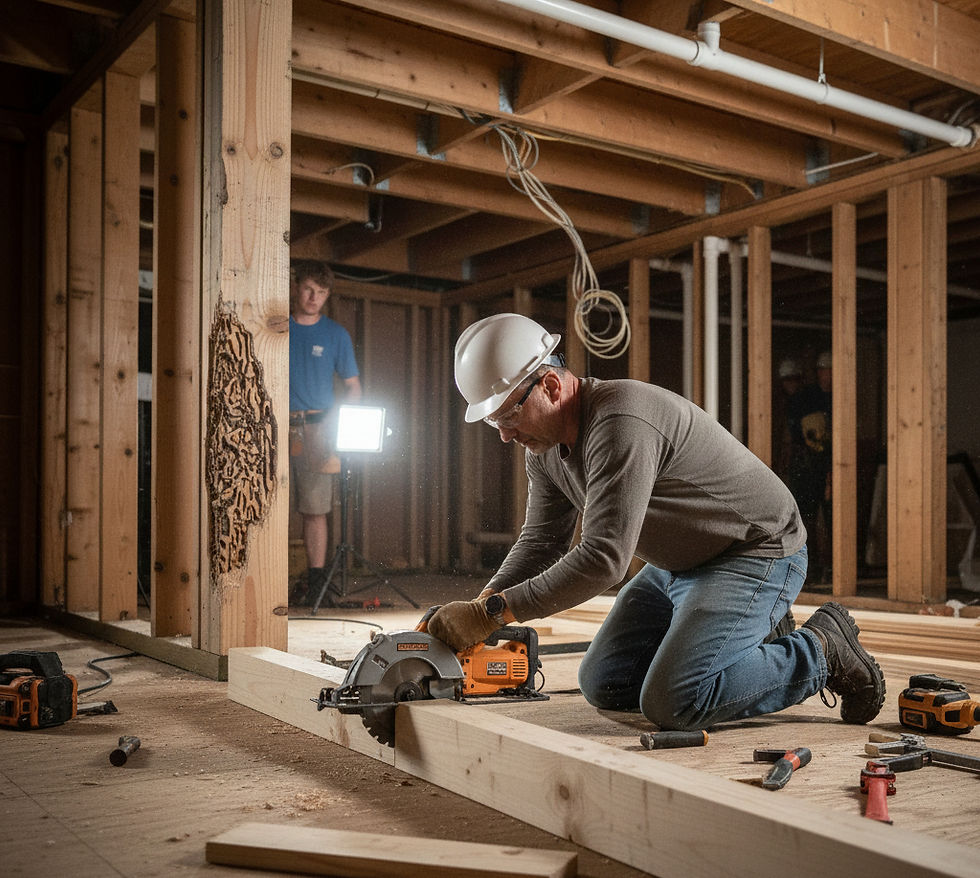
Misidentifying termite damage as water damage can dramatically increase long-term repair expenses. Cosmetic fixes such as patching drywall or applying wood filler for termite damage may temporarily hide the problem, but untreated termites will continue feeding on wood. Over time, this leads to structural instability and significantly higher repair costs.
When termite wood damage is properly identified early, repairs may be limited to localized areas. However, prolonged infestations often require:
Structural wood replacement
Reinforcement of framing or supports
Extensive restoration work
Understanding How to Repair Termite Damage correctly starts with eliminating termites first, then repairing affected materials based on severity.
Professional Inspection and Long-Term Protection
Determining whether damage is caused by termites or water requires expertise. Attack Pest Management specializes in identifying hidden infestations and differentiating them from moisture-related issues. Their comprehensive inspections ensure accurate diagnosis, effective treatment, and proper repair recommendations—whether the issue involves minor termite damage or extensive structural deterioration.
Repairing damage without addressing the root cause leaves your home vulnerable to repeat problems. A professional approach combines inspection, treatment, repair, and prevention to protect your investment long term.
Get Expert Help from Attack Pest Management:
Visit Attack Pest Control or call 626-915-1111 to schedule an inspection and get clear answers before damage worsens.
Frequently Asked Questions: Termite Damage vs Water Damage
1. How can I tell if damage is caused by termites or water?
Termite damage typically hollows wood from the inside, while water damage causes swelling, staining, or mold. A professional inspection is the most reliable way to confirm.
2. What does termite damage look like in walls?
It often appears as bubbling paint, hollow-sounding drywall, or cracking surfaces with no obvious moisture source.
3. Can termite damage look like water damage in pictures?
Yes. Pictures of water damage vs termite damage can appear similar, which is why physical inspection is necessary.
4. Does termite damage always involve visible mud tubes?
Not always. Subterranean termites build mud tubes, but drywood termites may cause damage without visible tubes.
5. Is termite wood damage dangerous to structural safety?
Yes. Termite wood damage can weaken load-bearing components, increasing the risk of structural failure if left untreated.
6. Should I fix damage before getting a termite inspection?
No. Repairs should only be done after confirming and treating termite activity to prevent reinfestation.
7. Can water damage attract termites?
Yes. Moist environments make wood more attractive to termites, increasing infestation risk.
8. How often should I get a termite inspection?
Most homes should be inspected annually, or sooner if damage or warning signs appear.


Comments