.png)
Signs Your Crawl Space Could Be Hiding a Termite Infestation
- 13 hours ago
- 5 min read
Most homeowners rarely think about their crawl space—and that's exactly why termites love it.
Hidden beneath your home, crawl spaces provide the perfect environment for termites to thrive. They're typically dark, damp, and undisturbed, giving termite colonies plenty of time to feed on wooden structures before anyone notices. By the time visible signs appear inside your home, the damage may already be extensive.
If your home has a crawl space, knowing what to look for can help you catch an infestation early and avoid expensive repairs. In this guide, we'll cover the most common signs of termite activity, why crawl spaces are so vulnerable, and what you can do to protect your home.
Why Crawl Spaces Attract Termites
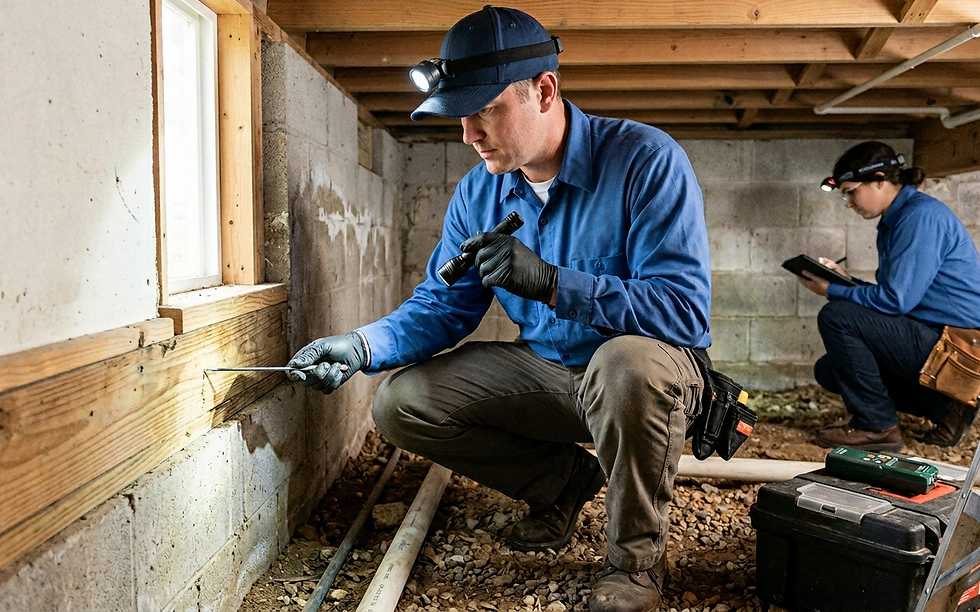
A crawl space creates ideal conditions for subterranean termites because it offers three things they need most: moisture, shelter, and easy access to wood.
Common conditions that attract termites include:
Damp soil beneath the home
Leaking plumbing or HVAC condensation
Poor ventilation
Wooden floor joists and support beams
Wood-to-soil contact
Dark, undisturbed spaces
According to the U.S. Environmental Protection Agency (EPA), moisture around your home's foundation significantly increases the risk of termite activity.
Signs Your Crawl Space Could Be Hiding a Termite Infestation

Homeowners often overlook one of the most vulnerable areas of their property—the crawl space. Learning the signs your crawl space could be hiding a termite infestation can help you catch problems early before termites spread to floor joists, support beams, and other structural components. A professional inspection can identify hidden activity long before visible damage appears inside your home.
Mud Tubes Along Foundation Walls
Subterranean termites build narrow mud tubes to travel safely between the soil and wooden structures.
These pencil-sized tunnels often appear on:
Concrete foundations
Crawl space walls
Support piers
Floor joists
If you notice mud tubes, there's a strong chance termites are actively feeding nearby.
Soft or Hollow Wooden Beams
Wood may appear perfectly normal on the outside while termites consume it from within.
Use a screwdriver to gently probe exposed wood in your crawl space. If it feels soft or sounds hollow when tapped, termite damage may already be present.
Sagging Floors Above the Crawl Space
Have you noticed your floors feeling:
Soft
Bouncy
Uneven
Squeaky
Damaged floor joists caused by termites can weaken the structural support beneath your flooring, leading to noticeable movement over time.
High Moisture Levels
Moisture is one of the biggest factors contributing to termite infestations.
Warning signs include:
Standing water
Condensation
Mold growth
Damp insulation
Water stains
Musty odors
Fixing moisture issues not only protects your home from mold but also makes your crawl space less attractive to termites.
Discarded Wings
Flying termites (called swarmers) leave behind piles of identical wings after finding a place to establish a new colony.
Look around:
Crawl space vents
Window sills
Foundation openings
Door thresholds
Finding discarded wings is often one of the earliest visible signs of an infestation.
Visible Wood Damage
Termite-damaged wood may appear:
Cracked
Thin
Layered
Blistered
Hollow
Unlike water damage, termite galleries usually follow the wood grain and may contain mud or dirt.
Why Crawl Space Infestations Are Often Missed

Many homeowners never enter their crawl space unless they're dealing with plumbing or foundation issues.
Unfortunately, termites take advantage of this.
Because they're hidden below the home, colonies often remain active for years before the damage reaches visible areas like walls, ceilings, or flooring.
By then, repairs may involve replacing:
Floor joists
Support beams
Subflooring
Insulation
Vapor barriers
Wooden framing
Routine inspections can detect problems long before they become expensive.
How a Professional Crawl Space Inspection Helps

A professional termite inspection goes beyond a quick visual check.
Experienced technicians inspect:
Foundation walls
Support beams
Floor joists
Moisture levels
Ventilation
Wood-to-soil contact
Existing termite damage
Active termite colonies
Professional inspections can identify hidden infestations that homeowners may overlook.
The University of California Integrated Pest Management (UC IPM) also recommends regular inspections in areas where termite activity is common.
How to Reduce the Risk of Crawl Space Termites
While no home is completely immune to termites, these simple steps can reduce your risk:
Keep Moisture Under Control
Repair plumbing leaks, improve drainage, and install vapor barriers if necessary.
Improve Ventilation
Proper airflow helps reduce humidity inside crawl spaces.
Eliminate Wood-to-Soil Contact
Keep wooden structures elevated above soil whenever possible.
Schedule Annual Inspections
Even if you don't see termites, annual inspections can catch hidden infestations early.
Remove Cellulose Debris
Old lumber, cardboard, leaves, and wood scraps provide food sources for termites.
Why Early Detection Saves Money
One of the biggest misconceptions about termites is that you'll notice them before they become a problem.
In reality, termites are experts at staying hidden.
Catching an infestation early may require only localized treatment.
Waiting too long can lead to structural repairs costing thousands of dollars.
Preventative inspections are almost always less expensive than repairing termite damage after it spreads.
Trusted Resources
For more information about termite prevention and home protection, explore these reputable sources:
Related Services
If you suspect termite activity in your crawl space, Attack Pest Control offers professional inspections and customized treatment plans to help protect your home.
Explore our services:
Frequently Asked Questions
Why do termites prefer crawl spaces?
Crawl spaces are dark, humid, and contain exposed wood, making them an ideal environment for subterranean termites.
How often should I inspect my crawl space?
It's recommended to inspect your crawl space at least once a year or schedule a professional termite inspection annually.
Can termites damage floor joists?
Yes. Termites commonly feed on floor joists, support beams, and subflooring, which can weaken your home's structure.
What do termite mud tubes look like?
Mud tubes are pencil-sized tunnels made from soil, saliva, and wood particles that termites use to travel safely between the ground and your home.
Does moisture increase the risk of termites?
Yes. Excess moisture is one of the biggest factors attracting termites to crawl spaces.
Can I check my crawl space for termites myself?
You can look for visible signs such as mud tubes, damaged wood, or discarded wings, but professional inspections are recommended because termites often remain hidden.
When should I call a termite professional?
If you notice mud tubes, soft wood, sagging floors, discarded wings, or any signs of termite activity, schedule an inspection as soon as possible.
How can I prevent termites in my crawl space?
Reduce moisture, improve ventilation, eliminate wood-to-soil contact, remove wood debris, and schedule regular professional inspections.
Call to Action
Protect Your Crawl Space Before Hidden Damage Becomes an Expensive Repair
Your crawl space may be out of sight, but it shouldn't be out of mind. Early termite detection can save you thousands of dollars in future structural repairs and help protect the value of your home.
At Attack Pest Control, we provide comprehensive termite inspections, effective treatment solutions, and long-term prevention plans designed to keep your home termite-free.
Schedule your crawl space termite inspection today.
🌐 Website: https://www.attack-pestcontrol.com/
📞 Call: 626-915-1111


Comments