.png)
The Cost of Waiting Too Long to Schedule a Termite Inspection
- Apr 15
- 4 min read
Updated: May 20
Most homeowners don’t think about termite inspections until they see visible damage.
Unfortunately, by the time you notice termites, the infestation may already be advanced.
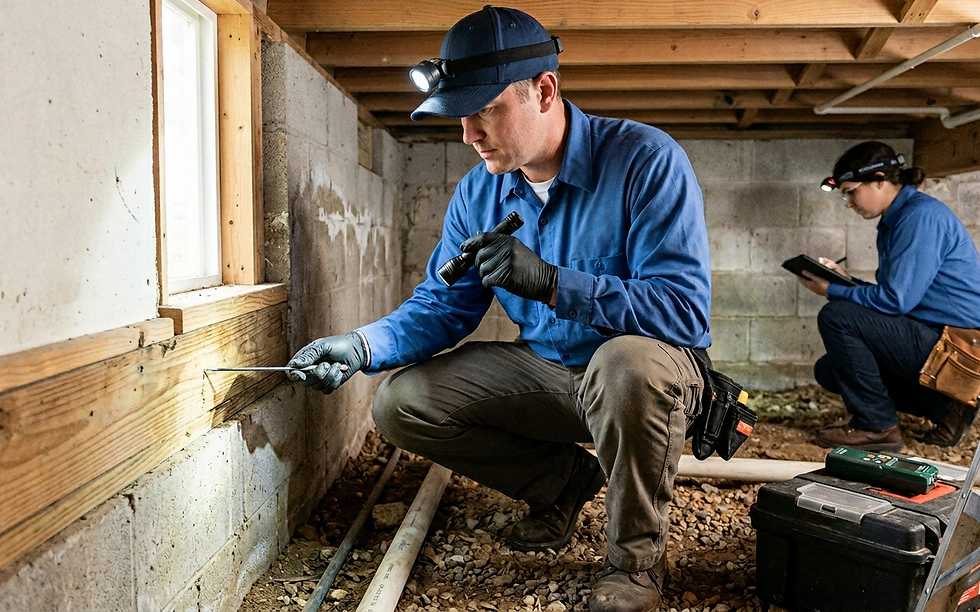
Termites work silently behind walls, beneath floors, and inside structural wood—often for months or even years before homeowners realize there’s a problem. Waiting too long to schedule a termite inspection can lead to significantly higher repair costs, more invasive treatment, and serious structural damage that could have been prevented with early detection. Termite damage can escalate quickly once infestations spread through framing and structural wood.
If you’ve been putting off a termite inspection, here’s what delaying could really cost you.
Small Problems Become Expensive Repairs

When termites are caught early, treatment is often simple and localized.
But when inspections are delayed, termites have more time to spread through your home’s structure. What could have been a small, manageable issue may turn into major repairs involving:
Structural beam replacement
Subfloor repair
Wall framing replacement
Ceiling support reinforcement
Drywall and paint restoration
Door and window frame replacement
The longer termites remain active, the more wood they consume—and the more expensive the repairs become.
Termite Damage Is Usually Not Covered by Insurance

Many homeowners assume their insurance will cover termite damage.
It usually won’t.
Most insurance providers classify termite damage as preventable maintenance, meaning homeowners are responsible for repair costs out of pocket. This is one reason termite damage can become such a major financial burden when left untreated.
The Cost of Waiting Too Long for a Termite Inspection
Early infestations can often be addressed with targeted spot treatments.
But once termites spread throughout multiple areas of the home, treatment may require:
Full-home fumigation
Extensive localized drilling/injection
Barrier treatments around the property
Ongoing monitoring and retreatment
More widespread infestations almost always mean more complex—and more expensive—treatment plans.
If you’re due for an inspection, scheduling a professional termite inspection through Attack Pest Management’s Termite Inspection Service can help identify problems before full-home treatment becomes necessary.
Structural Damage Can Create Safety Hazards
Termites don’t just damage trim or baseboards.
They attack the structural wood holding your home together.
Delayed inspections can allow termites to weaken:
Floor joists
Support beams
Wall studs
Ceiling framing
Roof supports
Severe infestations may lead to sagging floors, sticking doors, cracked drywall, and unsafe structural conditions. Hidden termite damage can eventually compromise the structural integrity of a home if left untreated.
Home Value Can Be Affected

Termite damage doesn’t just cost money in repairs—it can affect resale value.
If you plan to sell your home:
Termite damage may need to be disclosed
Buyers may request repairs before closing
Lenders may require inspections/reports
Unresolved termite issues can delay or kill deals
Protecting your home with regular inspections helps preserve long-term property value.
Delaying Gives Colonies More Time to Grow

Termites don’t stay in one place.
Once established, colonies continue expanding.
That means a delay of even a few months can allow termites to move from:
Baseboards → Wall framing
Crawl spaces → Subflooring
Attics → Roof supports
Exterior trim → Interior framing
The infestation often spreads far beyond where it originally started.
Early Inspections Help You Catch Hidden Problems

One of the biggest risks of waiting is that termites often remain invisible.
Professional inspectors know how to identify subtle warning signs such as:
Mud tubes along foundations
Hollow-sounding wood
Discarded termite wings
Frass/droppings
Moisture conditions attracting termites
Hidden wood damage in crawl spaces/attics
At Attack Pest Management, certified termite inspections help homeowners detect infestations before they become costly structural issues. Their licensed specialists provide detailed reports and prevention recommendations for Los Angeles
homeowners.
How Often Should You Schedule a Termite Inspection?
For most Southern California homeowners:
Every 1–2 years is recommended
Annually if your home has prior termite history
Immediately if you notice warning signs
Before buying or selling a home
In termite-prone areas like Los Angeles, proactive inspections can save homeowners thousands in preventable damage.
If termite activity is found, prompt treatment through Attack Pest Management’s termite control services can stop the infestation before further structural damage occurs.
FAQs
How much can delaying a termite inspection cost me?
Delaying can lead to thousands in repair costs if termites spread into structural wood before being discovered.
Is a termite inspection worth it if I don’t see termites?
Yes. Most termite infestations remain hidden until damage is advanced, so inspections help catch problems early.
How often should I get a termite inspection?
Most homeowners should schedule one every 1–2 years, or annually in high-risk areas.
Can termites cause structural damage quickly?
Yes. Once active, termites can continuously feed and expand their colony, increasing damage over time.
Does homeowners insurance cover termite damage?
Usually not. Most policies exclude termite damage because it is considered preventable.
What happens during a termite inspection?
A licensed inspector checks your home’s interior, exterior, attic, crawl space, and structural wood for signs of termite activity and damage.
Don’t Wait Until Termite Damage Gets Expensive
A delayed termite inspection can cost far more than the inspection itself.
At Attack Pest Management, we help Los Angeles homeowners catch termite issues early—before they turn into major repairs. Our licensed specialists provide detailed inspections, expert recommendations, and proven termite treatment solutions tailored to your property. With over 40 years of termite-only experience, we specialize in protecting homes throughout Southern California.


Comments