.png)
The Biggest Mistakes Homeowners Make After Discovering Termites
- 11 minutes ago
- 4 min read
Finding termites in your home can be alarming. Whether you've spotted mud tubes along your foundation, discovered hollow wood, or noticed a swarm of flying termites, your first reaction may be to fix the problem as quickly as possible.
Unfortunately, many homeowners make decisions that actually make the infestation worse.
From delaying treatment to relying on DIY products, these common mistakes often allow termite colonies to continue growing unnoticed. What could have been resolved with a professional inspection may eventually require extensive structural repairs that cost thousands of dollars.
If you've recently discovered termites—or suspect they're hiding in your home—here are the biggest mistakes to avoid and the steps you should take instead.
Why Acting Quickly Matters

Unlike many household pests, termites don't stop feeding.
Every day an active colony remains inside your home, it continues damaging wooden framing, floor joists, support beams, cabinets, and other structural components.
According to the U.S. Environmental Protection Agency (EPA), termites cause billions of dollars in property damage each year, and most homeowners insurance policies do not cover termite-related repairs.
The sooner termites are identified and treated, the less damage they're likely to cause.
The Biggest Mistakes Homeowners Make After Discovering Termites

Knowing the biggest mistakes homeowners make after discovering termites can help you avoid unnecessary repairs and protect your home's structural integrity.
Mistake 1: Ignoring the Problem
Some homeowners assume the damage is old or that seeing one or two termites isn't a major concern.
Unfortunately, visible termites are often only a small part of a much larger colony hidden behind walls, beneath flooring, or inside crawl spaces.
Waiting weeks—or even months—before scheduling an inspection allows the infestation to spread.
Mistake 2: Using DIY Sprays as a Permanent Solution
Store-bought termite sprays may kill the insects you can see, but they rarely eliminate the colony.
Subterranean termites often live underground, while drywood termites remain hidden deep inside wood.
Professional treatments target the source of the infestation rather than just the visible insects.
Mistake 3: Repairing Damaged Wood Before Treatment
It's tempting to replace damaged trim, flooring, or wooden beams immediately.
However, repairing wood before eliminating the termites can hide the infestation rather than solve it.
Always have the colony treated first.
After professionals confirm the termites have been eliminated, damaged materials can safely be repaired or replaced.
Mistake 4: Assuming the Damage Isn't Serious
Many termite infestations begin quietly.
By the time floors become soft or doors stop closing properly, termites may have already damaged structural framing.
Small cosmetic issues often hide much larger structural problems.
Never assume the damage is only superficial.
Mistake 5: Skipping a Professional Inspection
Some homeowners inspect only the visible damage.
Professionals inspect much more than what's visible.
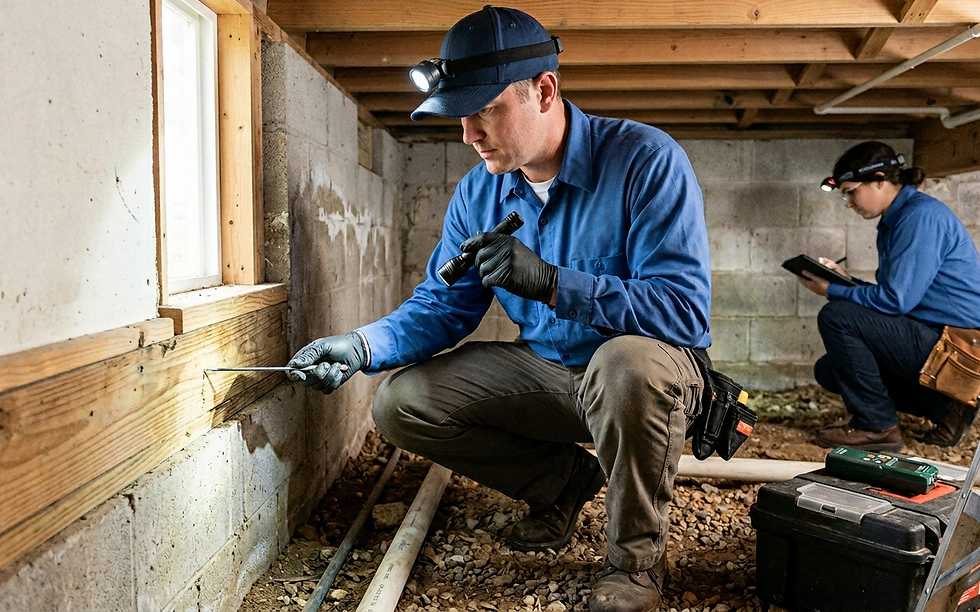
A comprehensive termite inspection includes:
Crawl spaces
Attics
Foundations
Floor joists
Support beams
Exterior walls
Moisture-prone areas
This helps identify hidden termite activity before additional damage occurs.
Mistake 6: Forgetting About Moisture Problems
Moisture and termites often go hand in hand.
Leaking pipes, clogged gutters, poor drainage, and inadequate crawl space ventilation all create conditions that attract termites.
Fixing moisture problems helps reduce the likelihood of future infestations.
Mistake 7: Waiting Until You See More Damage
One of the costliest mistakes homeowners make is waiting for "more proof."
Unfortunately, termites rarely become easier to detect over time—they simply continue damaging your home behind the scenes.
Early treatment is almost always less expensive than repairing extensive structural damage later.
Mistake 8: Not Scheduling Annual Inspections
Even after treatment, routine inspections remain important.
Annual termite inspections help detect new colonies before they become established.
Regular inspections also identify moisture issues and other conditions that increase termite risk.
What You Should Do Instead

If you discover termites, follow these steps:
Don't Disturb the Colony
Avoid breaking mud tubes or spraying visible termites before an inspection.
This can make the infestation harder to evaluate.
Schedule a Professional Inspection
A licensed termite professional can determine:
Termite species
Extent of damage
Location of the colony
Best treatment option
Correct Moisture Problems
Repair plumbing leaks, improve drainage, and reduce humidity around your foundation.
Follow Treatment Recommendations
Every infestation is different.
Professional treatment plans are customized based on your home's construction and the type of termites present.
Why Professional Termite Treatment Makes a Difference

Professional termite control focuses on eliminating the entire colony—not just the termites you happen to see.
Experienced technicians use proven treatment methods to protect your home while identifying conditions that may lead to future infestations.
The University of California Integrated Pest Management (UC IPM) also recommends accurate identification and professional management for termite infestations.
You can also explore homeowner resources from the National Pest Management Association (NPMA):https://www.pestworld.org/pest-guide/termites/
Related Attack Pest Control Services
Protect your home with professional termite solutions from Attack Pest Control.
Our services include:
Professional Termite Inspections
Residential Termite Treatments
Preventative Termite Protection
Ongoing Monitoring Programs
Learn more:
Frequently Asked Questions
Should I remove termite-damaged wood immediately?
No. It's best to eliminate the termite colony first before replacing damaged materials.
Can DIY termite sprays eliminate an infestation?
DIY products may kill visible termites but usually do not eliminate the entire colony.
Why shouldn't I ignore a few termites?
Seeing a few termites often indicates a much larger hidden colony that may already be damaging your home's structure.
How soon should I schedule an inspection after finding termites?
Immediately. Early inspections help prevent additional structural damage and reduce repair costs.
What attracts termites to my home?
Moisture, wood-to-soil contact, leaking plumbing, poor drainage, and untreated wood all increase termite risk.
How often should I have my home inspected for termites?
Most experts recommend a professional termite inspection once a year.
Are termites covered by homeowners insurance?
Most standard homeowners insurance policies do not cover termite damage because it is considered preventable maintenance.
What is the biggest mistake homeowners make after
discovering termites?
The biggest mistake is delaying professional treatment. Waiting allows termites to continue damaging the home's structure, often resulting in more expensive repairs.
Call to Action
Don't Let a Small Termite Problem Become a Costly Home Repair
If you've discovered termites, taking the right steps now can save you thousands of dollars in future repairs. Avoid common mistakes by scheduling a professional inspection as soon as possible.
At Attack Pest Control, we provide comprehensive termite inspections, effective treatments, and long-term prevention plans designed to protect your home and your investment.
Schedule your termite inspection today.
🌐 Website: https://www.attack-pestcontrol.com/
📞 Call: 626-915-1111

Comments