.png)
Professional Termite Inspection Services: How Experts Protect Your Home
- Jan 29
- 6 min read
Updated: May 20
Homeowners rely on professional termite inspection services to uncover hidden wood damage, identify termite species, and prevent expensive structural repairs.
Termites are one of the most destructive structural pests in the United States, causing billions of dollars in damage every year. Their ability to live in silence, feed behind walls, and remain undetected for long periods makes them a serious threat to homeowners. While many property owners assume they would recognize a termite problem early, the reality is far different. In most cases, termite damage is discovered only after extensive structural repairs are needed.
Professional termite inspections play a crucial role in protecting homes from this type of hidden deterioration. By combining industry knowledge, specialized tools, and species identification techniques, trained inspectors can detect early warning signs, evaluate the extent of an infestation, and recommend appropriate treatments before repair costs escalate. This is something that basic homeowner checks—and even general contractors—are not equipped to do accurately.
This article explains how professional termite inspections work, why they are necessary, and how they prevent expensive long-term damage.
The Challenge of Termite Detection in Residential Structures

Termites are not surface pests. Unlike rodents or cockroaches, they do not leave obvious trails through living spaces, nor do they create noticeable noises or smells. Most termite activity occurs inside structural wood, beneath flooring, or behind drywall—areas that homeowners rarely inspect.
There are three major reasons termites are so difficult to detect without professional help:
1. Termites Consume Wood from the Inside Out
Most homeowners envision wood damage as chips, cracks, or rotting surfaces. Termites work differently. They hollow out the interior of wood framing while leaving a thin exterior surface intact for moisture control. This allows the colony to feed while remaining undisturbed.
From a homeowner’s viewpoint, the wood may look structurally sound until it is tapped or opened, at which point it reveals the hollow interior.
2. Evidence of Infestation Is Subtle and Intermittent
Certain signs of termite activity exist, but they are easy to miss. These include:
Discarded wings near windows or light fixtures
Small piles of frass (pellet-like droppings)
Mud tubes along foundations or crawlspaces
Soft or hollow-sounding wood
Slight bubbling or warping of paint or drywall
Many of these signs can be misinterpreted as dirt, dust, or normal aging.
3. Termites Prefer Inaccessible Areas
Depending on the species, colonies may establish themselves in:
Crawlspaces
Attics
Subflooring
Wall voids
Foundation cracks
Roof framing
Basement timbers
These areas require specialized access and lighting, making them unsuitable for DIY evaluation.
Termite Species Identification: A Critical Part of Professional Inspection

Different termite species behave differently, nest differently, and require different treatments. One of the critical roles of a professional inspection is identifying the species involved. In the western United States—particularly California—the most common species include:
Drywood Termites
Do not require soil contact
Live entirely inside dry wood
Found in attics, rafters, window frames, and furniture
Leave behind frass that resembles coffee grounds or sand
Drywood termite activity can remain concealed for years, making inspections essential for older homes and properties with extensive wood framing.
Subterranean Termites
Live underground and require moisture
Build mud tubes to access homes
Often enter through foundation cracks or utility penetrations
Subterranean termites are responsible for the most extensive structural damage because they continuously feed and expand their reach. Moisture issues such as leaking pipes, poor drainage, or soil contact with siding greatly increase the risk of subterranean colonization.
Dampwood Termites (Less Common in Residential Settings)
These termites require high moisture levels and are more frequently found in logs, fallen trees, or wood in direct soil contact. While less common indoors, their presence indicates underlying moisture or drainage issues.
Because treatment options depend heavily on species identification, professional inspections ensure that homeowners receive the correct approach—whether that involves localized treatments, baiting systems, fumigation, or structural repairs.
How Professional Termite Inspection Services Work

A professional termite inspection goes far beyond looking for visible signs. Licensed inspectors follow a systematic procedure designed to examine the building envelope, internal structural components, and environmental conditions that attract termites.
A thorough inspection consists of the following steps:
1. Evaluation of Exterior Structures and Environmental Conditions
Inspectors begin outside, where termite activity often starts. This includes checking:
Soil contact with wood siding
Foundation expansion joints
Fence posts attached to the home
Decks and patios
Drainage patterns
Mulch beds, planter boxes, and irrigation systems
Cracks in slab foundations
Areas with chronic moisture buildup
Environmental conditions matter because moisture and wood-to-ground contact are major risk factors. Many infestations begin outside and move inward gradually.
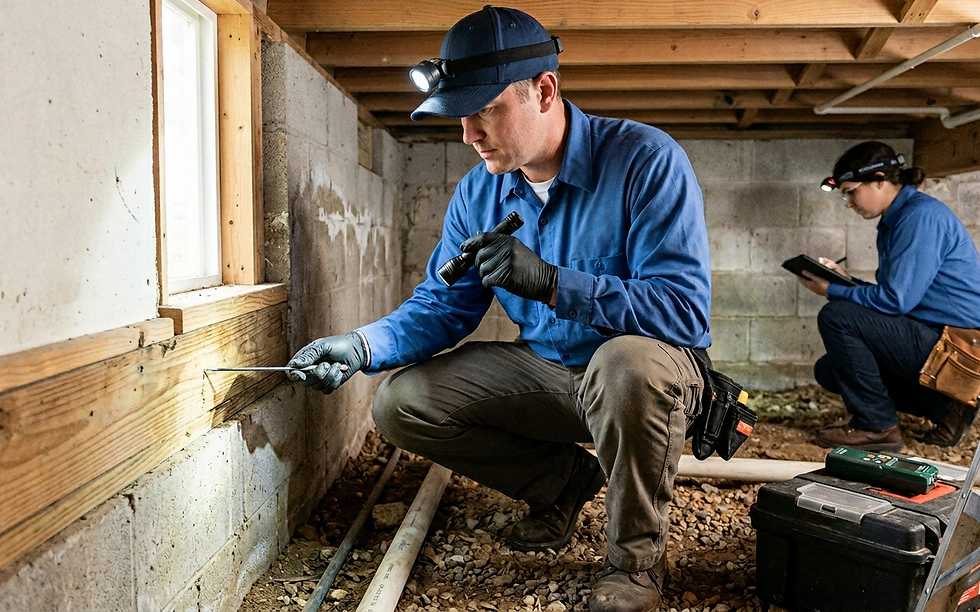
2. Inspection of Crawlspaces, Attics, and Subflooring
Termites often use these areas as entry points or feeding grounds. Inspectors will look for:
Mud tubes (subterranean access tunnels)
Termite galleries in wood
Moisture staining
Frass deposits
Damaged or hollow timbers
Fungus or decay that attracts colonies
These areas are typically inaccessible to homeowners, yet they reveal vital information about colony activity and structural integrity.
3. Use of Specialized Tools for Detection
Inspection tools help professionals evaluate hidden damage without destructive testing. Common tools include:
Moisture meters — identify damp wood vulnerable to subterranean termites
Probing instruments — assess whether wood is solid or hollowed
Borescopes — view inside wall cavities with minimal disruption
High-powered lights — illuminate attics, crawlspaces, and voids
These tools provide data that DIY inspections cannot replicate.
4. Identification of Structural Damage Patterns
Trained inspectors understand how termite damage patterns differ from other types of wood deterioration. For example:
Termite galleries vs. carpenter ant tunnels
Moisture rot vs. termite hollowing
Frass piles vs. wood dust from drilling
Correct identification prevents misdiagnosis, which can lead to unnecessary repairs or ineffective treatments.
5. Assessment of Infestation Extent and Risk Level
After physical inspection and species identification, inspectors determine the severity of the infestation. They assess:
How long the colony has been active
Whether damage is superficial or structural
Which areas need immediate intervention
Whether fumigation or localized treatment is appropriate
Risk of re-infestation based on environmental conditions
This information becomes part of a written report, which is valuable for real estate transactions, insurance inquiries, and renovation planning.
How Professional Inspections Prevent Costly Repairs

The financial impact of termite damage varies significantly depending on how early it’s discovered. Some repairs are minor, involving only cosmetic replacement of baseboards or trim. Others involve structural reinforcements, subfloor replacement, or beam repair—projects that can cost tens of thousands of dollars.
Professional inspections reduce repair costs through:
Early Detection of Structural Damage
Damage identified early is easier and less expensive to fix. For example, discovering hollowed baseboards before termites reach wall studs can prevent structural compromise.
Correct Treatment Based on Species
Drywood termites may require localized injections or whole-structure fumigation. Subterranean termites may require soil treatments or baiting systems. Using the wrong approach wastes time and money.
Documentation for Real Estate Transactions
Sellers benefit from clean inspection reports, while buyers avoid purchasing a structurally compromised property. Lenders and insurers often require this documentation.
Environmental Risk Mitigation
Inspectors can help homeowners correct conditions that attract termites, such as:
Wood piles near foundations
Substandard drainage
Soil contacting siding
Crawlspace leaks
Faulty irrigation
Correcting these issues prevents future infestations.
Why Homeowners Should Consider Annual or Biannual Inspections
Most professionals recommend inspections:
Annually in termite-prone regions
Every 2–3 years in lower-risk zones
Before selling or buying a home
After discovering moisture leaks
Before and after major renovations
Because termites are silent and persistent, waiting until visible damage appears is rarely a cost-saving strategy.
Who Should Perform a Professional Inspection

Not all pest control companies specialize in termites, and not all contractors are trained to diagnose infestations. A proper inspection should always be performed by a licensed termite specialist who understands:
Species variations
Structural behavior
Environmental triggers
Moisture dynamics
Treatment protocols
Companies like Attack Pest Management offer precisely this level of expertise, ensuring homeowners receive accurate information and appropriate treatment recommendations.
Conclusion: Protecting Homes Through Professional Termite Assessment
Termites are not a minor nuisance—they are a structural threat. Their ability to remain hidden while causing significant internal damage makes them uniquely dangerous to residential properties. Professional termite inspections offer homeowners the most effective defense by uncovering concealed damage, identifying species, and recommending targeted treatments before costs escalate.
Annual inspections are a small investment compared to the price of structural repairs, fumigation, or lost property value during resale. Protecting your home is not only about eliminating termites—it’s about detecting them before they have time to cause irreversible damage.
Schedule an Expert Termite Inspection
If you want to protect your home from hidden wood damage, expensive repairs, and long-term structural issues, schedule a professional inspection today.

Comments